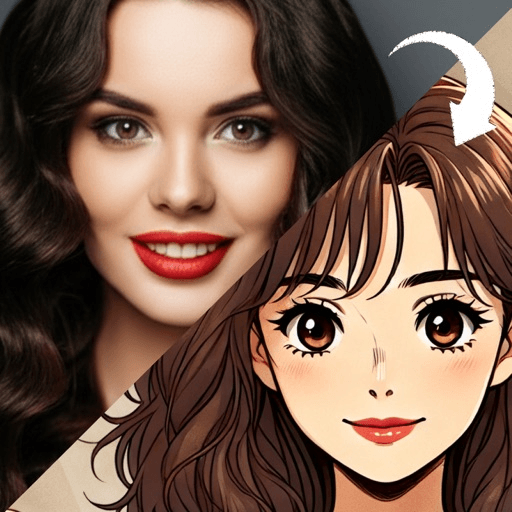
Matching profile pictures work when both images share the same style, palette, crop and background, and differ in exactly one deliberate detail. Make both from similar photos, in one sitting, with one look. That way the pair reads as a pair when the two appear side by side, and each still works on its own.
That last condition matters more than it sounds. Most of the time, nobody sees your two pictures together. They see yours in one chat and your friend’s in another. A matching pair has to be a good profile picture first and half of a set second.
What makes two profile pictures read as a matching pair?
People have been solving this problem for centuries, and the answer has barely changed. Tate defines a pendant picture as one of two pictures designed to hang together as a matching pair, and describes the formula: they are usually the same size, and of subjects that are basically similar but differ in detail.
Same size, similar subject, different detail. That is the whole rulebook for matching profile pictures, and it breaks down into four decisions:
- One style. Both pictures are made in the same look. Mixing a painted portrait with a flat cartoon breaks the match instantly, however well each one turned out.
- One palette. Share background colors, or use a deliberate pair: the same two colors swapped between the pictures.
- One crop. Heads the same size in the frame, eyes at the same height. If one of you fills the circle and the other floats in it, the pair reads as unrelated.
- One difference. A single detail that changes: the background color, the expression, the direction each of you faces, or an object each holds. This is what makes a pair feel designed rather than duplicated.
What can old paired portraits teach about matching pfps?
More than you would expect. Wikipedia notes that pendant pairs of portraits of married couples are very common, and Tate says pendant pairs were usually displayed on either side of a fireplace or even a door. The two pictures were meant to be seen as a set, but each one hung alone in its own frame, a little like two avatars in two separate apps.
Two more details from that tradition are directly useful.
A match can be made later. Tate notes that pendant pairs were not always conceived as such: buyers of a one-off picture would sometimes ask the artist to paint a pendant. If your friend already has a cartoon profile picture you like, you do not need to start over. Use the same look and background color with your own photo, and match their crop.
Pendant or diptych. Tate describes a diptych as an artwork of two painted or carved panels that can be attached together or presented adjoining each other, and Wikipedia draws the distinction: a diptych’s two panels are joined and cannot be separated, while pendants are separate works. Matching profile pictures come in both kinds. Pendant-style pairs are two complete portraits that happen to match. Diptych-style pairs are one image split in half, such as a single background or a shape that only completes when the two sit side by side.
Diptych-style pairs look clever in a screenshot of both profiles, and they look like half a picture everywhere else. Since each profile picture is almost always seen alone, pendant-style pairs are the safer choice. If you want a diptych element, keep it small, a background that continues, not a face that is cut off.
Matching profile picture ideas that hold up
Each of these follows the four decisions above, and each uses a look that works at thumbnail size.
- Mirrored poses. Both of you turned slightly toward the center, so the pictures face each other when they sit side by side. Classic, subtle and works in any style.
- Swapped colors. Same look, same crop, backgrounds in two colors that trade places: pink behind one of you, yellow behind the other, with the accent color of each picture taken from the other’s background.
- Retro cartoon pair. The retro cartoon filter look, bold outline and flat color, is the easiest style to match because its palette is small and controllable.
- 3D avatar pair. A 3D cartoon avatar suits most faces, which matters when two different faces have to work in the same look. It is the safest pairing if you are not sure.
- Voxel pair for a gaming duo. Two voxel art avatars read instantly in a friends list. As what voxel art is explains, the look favors clear hair shapes and strong contrast, so check that it suits both faces before you commit.
- Anime pair with one accent each. The anime style filter with the same neutral background and a single different accent color for each person: hair highlight, top or background edge.
- Chibi pair. Two chibi avatars, head and shoulders only. The oversized heads make both faces fill the circle, so the pair matches in scale automatically.
- Storybook pair. The storybook illustration look is the gentlest option, good for couples and for a parent and child. Crop tight, since soft edges lose detail when small.
- Pop art pair. Two pop art portraits with loud backgrounds in a deliberate color pair. Bold enough that the match reads across a crowded group chat.
Which looks pair well, and which clash?
Looks from the same family pair naturally: two flat-color styles, two rendered styles, two painted styles. Looks from different families almost always clash, even when the colors match, because one picture is built from lines and the other from light.
The harder problem is two different faces in one style. Every look suits some faces more than others. If one of you has bold features and strong hair contrast and the other has softer, subtler features, a voxel or pixel look will flatter one and flatten the other. Rendered and painted looks are more even-handed, which is why the 3D cartoon avatar and storybook illustration are the safest pairs. Before you pick, run both photos through the style and look at the two results side by side at small size.
How do you make matching profile pictures?
- Shoot both photos the same way. Same light, same distance, same height, ideally in the same session. Different lighting is the most common reason a pair does not match after conversion.
- Turn toward each other. If you want mirrored poses, one person angles slightly left and the other slightly right. Keep it slight; a strong angle converts poorly.
- Convert both in the same look. Generate each a few times, then choose the two that match best, not the two best individually.
- Set the backgrounds. Same color, or a deliberate pair.
- Crop to the same template. Head size, eye height and headroom identical.
- Check them alone and together. Each at thumbnail size on its own, then side by side.
For the basics of making one good avatar before you make two, how to make a cartoon avatar of yourself covers the photo and the matching crops, and cartoon profile picture ideas compares eleven looks by how well they read small.
Toonsta suits the convert-both step. It ships five of the looks above, the retro cartoon filter, the 3D cartoon avatar, the voxel art avatar, the anime style filter and the storybook illustration; the chibi and pop art pairs are described on their style pages as reference, not as app features. Run both photos through the same one, regenerate until the two sit together, then crop them to one template.