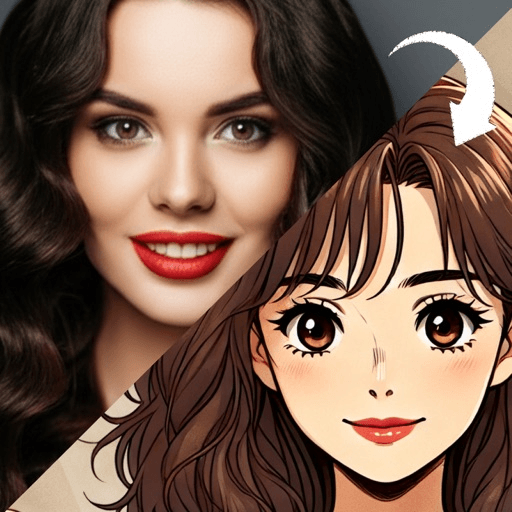
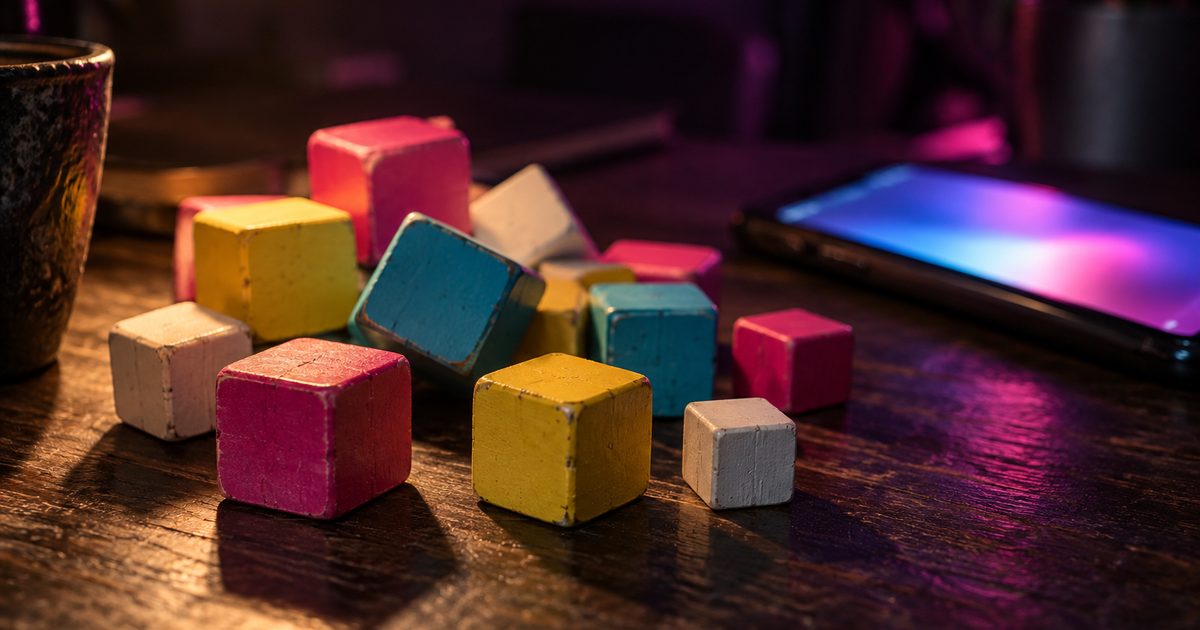
Voxel art is three-dimensional art built from visible cubes. A voxel is a value on a regular 3D grid, the volume counterpart of a pixel, and voxel art makes those grid cells big enough to see, so every curve becomes a staircase of blocks. Applied to a portrait, it keeps the big shapes and drops the fine features.
That trade is the whole personality of the style. It is blunt, graphic and oddly friendly, and it rewards faces that can be summed up in a few strong shapes.
What is a voxel, exactly?
The word is built the same way as pixel. Wikipedia explains that voxel originated by analogy to pixel, with vo standing for volume in place of picture, and el for element. A pixel is a picture element; a voxel is a volume element.
Technically, Wikipedia defines a voxel as a representation of a value on a three-dimensional regular grid, akin to the two-dimensional pixel, and notes that voxels are frequently used in the visualization and analysis of medical and scientific data. The Oxford Dictionary of Computing, as published on Encyclopedia.com, puts it more plainly: the three-dimensional equivalent of a pixel, an axis-aligned box.
Axis-aligned is the important part for anyone looking at voxel art. Every cube sits square to the same grid. None of them tilt or rotate. That constraint is what produces the look: a head cannot curve, it can only step.
How is voxel art different from pixel art?
Wikipedia describes voxel art as a style and format of 3D art analogous to pixel art, and the two share a discipline. Pixel art, in Wikipedia’s words, is distinguished when the individual pixels play an important role in the composition, usually requiring deliberate control over where each one goes, and it commonly uses a low overall color count. Voxel art applies the same thinking to cubes.
The difference is depth. A pixel art filter look is flat: a grid of colored squares with shading painted in as two or three bands of tone. A voxel art avatar is a small sculpture. Because the cubes exist in 3D, they can be lit, so each block has a bright top, a darker side and a real shadow falling on the blocks behind it. That lighting is what makes voxel portraits feel solid and toy-like rather than retro and flat. To see what the flat version keeps and what it throws away, read photo to pixel art.
Where does the look come from?
The computing history is recent, but the idea is ancient. Tate defines a mosaic as a picture made up of small parts, traditionally tiny tiles of terracotta, glass, ceramic or marble, and notes that mosaic has been used as a decorative medium for over five thousand years. Building a recognizable image from uniform units that are individually meaningless is one of the oldest picture-making techniques there is. Pixel art is the flat, digital version. Voxel art is the version that stands up.
In computing, voxels are a workhorse of scientific imaging, used to render scans and data volumes, and Wikipedia notes they found a second life in games and digital art, where the cubes were left visible on purpose. The appeal was the same as mosaic’s: a hard constraint that forces every choice to be deliberate.
What does voxel art do to a face?
It quantizes. Every smooth curve on your face, the jaw, the cheek, the line of your hair, gets rounded to the nearest cube. How much survives depends almost entirely on the size of those cubes relative to your head, and this is the part that decides whether a voxel portrait works.
At a coarse grid, where your whole face is perhaps a dozen cubes wide:
- Your eyes become one or two cubes each, so their shape disappears and only their color and spacing remain.
- Your nose is a single protruding block, or nothing.
- Your mouth is a short row of darker cubes.
- Your hair becomes a blocky shell, and its overall silhouette is the strongest thing left.
At a finer grid, eyebrows, eye shape and the corners of the mouth begin to appear, and the face gets more expressive, but it also starts to lose the bold, toy-like quality that makes the style appealing in the first place.
Across both, some things survive reliably: the outline of your hair, the contrast between hair and skin, glasses (which become a solid bar or a pair of square frames), a beard (a solid block of color), and bright clothing. Subtle things do not: freckles, fine wrinkles, the exact shape of your nose, and small shifts of expression.
Why does voxel art flatter a simple face?
Because a simple face is already a few strong shapes, and those are exactly what the grid keeps.
Voxel portraits tend to look best on people with:
- Clear hair shape. A defined cut, curls, a bun, a strong fringe. The hair silhouette carries most of the recognition.
- High contrast between hair and skin. Dark hair on light skin, light hair on dark skin, or a bold dyed color.
- One bold accessory. Glasses, a hat, big earrings. These read as strong blocks.
They tend to flatter less when a face is recognized mainly by subtle features: a particular smile, a nose shape, fine brows. The grid cannot hold those, so the portrait can end up generic. The same is true when hair and skin are close in tone, since the two merge into one block of color.
That is not a flaw, it is a fit question. The same holds for proportion-driven looks like the one in what chibi style is: each style keeps a different set of features, and a face either has those features or does not.
How should you shoot a photo for a voxel portrait?
- Even light, straight on. The style adds its own lighting to the cubes, so shadows in your photo only confuse the colors.
- Hair fully visible. No hood, no crop through the top of the head. The silhouette is the portrait.
- A plain background that contrasts with your hair.
- Wear a strong color. A saturated top gives the bottom of the avatar a bold block of color to anchor it.
- Keep your glasses on if you usually wear them. They survive the grid better than almost any other feature.
Is voxel art a good choice for an avatar?
For small sizes, very good. A blocky silhouette reads instantly in a list of thumbnails, and it looks at home on gaming and streaming profiles in particular. The cartoon profile picture ideas list compares it with ten other looks by how well each reads small, and how to make a cartoon avatar of yourself covers turning one image into a matching set.
If you want the rendered, sculpted feel without the blocks, the 3D cartoon avatar is the smooth sibling: the same lit, solid, toy-like presence with curves instead of steps.
Voxel is one of the five looks Toonsta ships, as the voxel art avatar. Upload a clear, evenly lit photo with your hair fully visible, generate, and regenerate a couple of times; each run places the cubes a little differently, and the one where your hair outline reads right is usually the keeper.