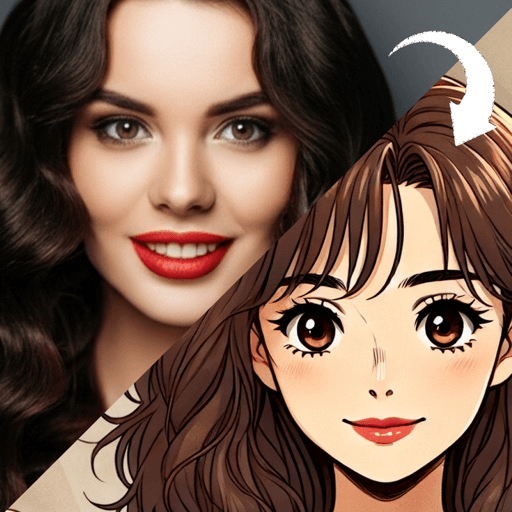
The look
- A varied ink contour that thickens on the shadow side.
- Screentone dots or hatching instead of smooth gray shading.
- Enlarged eyes with a bright catchlight and a simplified nose.
- Black, white and gray only, with no color fills.
- Speed lines or a tonal burst behind the head for emphasis.
Where it comes from
Manga is a print form first and a drawing style second. British Museum material on the medium says its roots are international and reach back as far as 1200 AD, while the form as it is known today emerged from serialized cartoon strips in magazines and newspapers by the 1920s. Britannica notes that manga is normally printed in black and white on poor quality paper, with only a few pages of color, which keeps it cheap to produce and cheap to buy. The look people copy follows from that page: ink contours carrying the form, dot screens standing in for tone, features drawn in simple lines, and the eyes doing the expressive work.
What it suits
- A black and white profile picture that stands out in a color feed
- Convention badges and print-outs
- Panel style portraits for two people
- Bookmarks and small prints
How to shoot for it
- Use side light so there is a clear shadow edge for the hatching to follow.
- Shoot close, from the collarbone up, since the detail lives in the face.
- Choose a defined expression; ink has no soft middle ground.
- Keep the background simple so the tone screens read as deliberate.
This look is not in Toonsta today. It is described here so you can recognize it; the closest Toonsta styles are listed below.
Related styles
- Chibi avatar: A chibi avatar shrinks you to about two heads tall.
- Anime style filter: An anime style filter redraws your photo as a cel painted frame.
- Comic book filter: A comic book filter gives your photo an inked contour, flat printed color inside it, and dot texture through the mid tones.